


Adoption Details For Lumina!
This animal is no longer available for adoption


Name:
Lumina
Animal Id:
14578
Date Created:
9/9/2025 12:09:28 PM
Age:
5 Year(s) 7 Month(s) Old
Type:
Lizard
Gender:
Undetermined
Primary Breed:
Bearded Dragon
Spayed / Neutered:
No
Secondary Breed:
Microchip:
Primary Color:
Red
Markings:
Secondary Color:
Black
Pattern:
Weight:
PENDING ADOPTION!!!
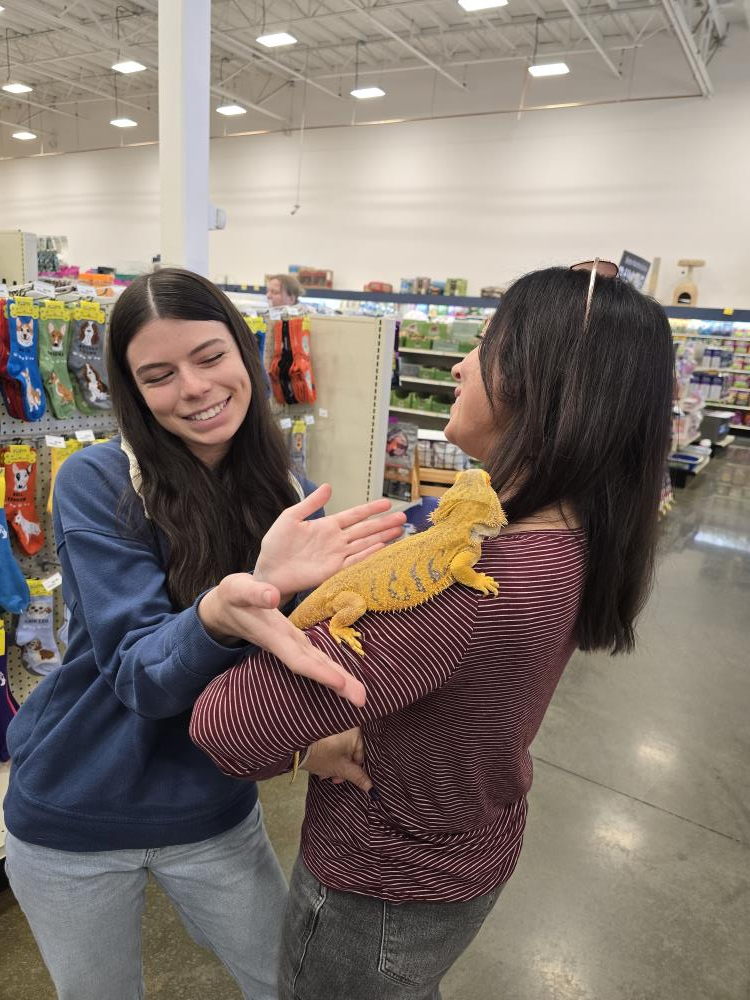
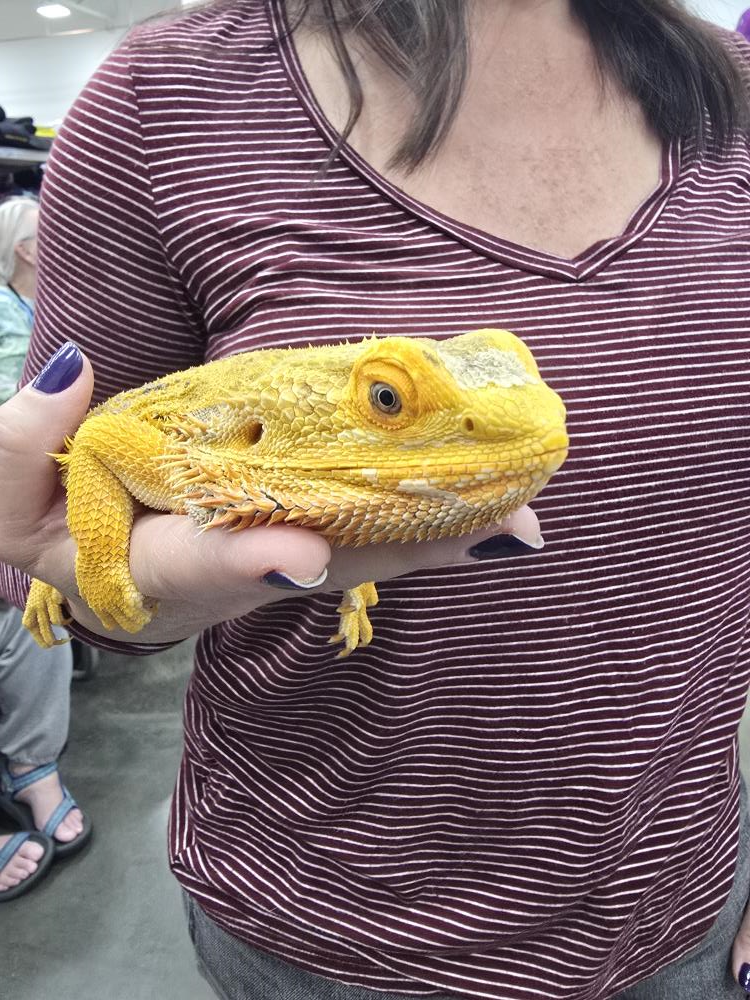
Hi there — my name is Lumina, and 2026 is my year to find my forever family. 🐍✨
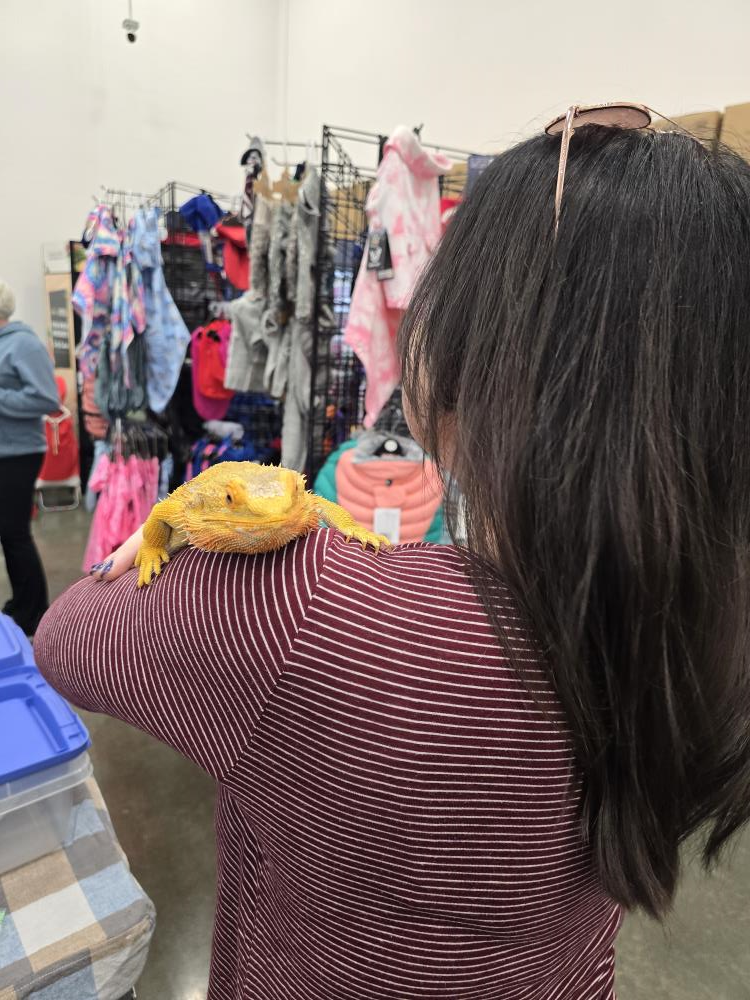
I’m a stunning and dynamic bearded dragon whose colors can shift beautifully from orange to light yellow, depending on the light, my mood, and the time of year — a little daily magic to brighten your life! 🌟💛
I was transferred into rescue in September 2025 after being dumped at BPV. It was said that I didn’t receive the best husbandry or diet before arriving, but don’t worry — I am now healthy, and I’ve been thriving in my foster home.
I’m calm, observant, and curious about my surroundings. I respond best to slow, consistent handling, and I may need a little time to adjust to new people. Once we get to know each other, I’ll become a loyal, enchanting companion.
💚 Bearded Dragon Basics & Tips
• Daily UVB lighting is essential for calcium absorption and bone health
• Provide a balanced diet: As an adult, I need 85% greens and vegetables, 15% insects, and 5% fruits
• I am a desert animal, so my humidity needs to be low
• I can live between 10 and 14 years
• Monitor temperature gradients carefully — warm basking areas and cooler retreat areas
• Offer enrichment like branches, rocks, and hides for climbing and exploring - But not too much clutter, I like space
• Regular observation of appetite, shedding, and activity helps detect health issues early
🏠 Husbandry & Enclosure Needs
• Minimum enclosure: 4 feet x 2 feet x 2 feet - The rescue team will help guide you
• Basking Spot / Hot Side: 95–110°F (35–43°C) — provides heat for digestion and activity
• Cool Side / Retreat Area: 75–85°F (24–29°C) — allows thermoregulation and rest
• Nighttime Temperature: 65–75°F (18–24°C) — safe for resting; do not let it drop below 65°F
• UVB Lighting: Essential daily, paired with proper basking heat, to support calcium absorption and bone health
• Yes, I need access to water on the cool side
🐍 I’m looking for a human who:
• Can provide a safe, secure, and enriching environment
• Looks forward to working with me daily
• Is patient and gentle, giving me time to settle in and trust you
• Will appreciate my color-changing magic and unique personality
• Wants to learn and grow with me as I thrive in my forever home
I can’t wait to bring curiosity, beauty, and a little daily magic into the life of the right person. Could 2026 be the year we find each other? 🏡✨
💛🎁 If you’d like to make me part of your family now, please click the Adoption Application button below — I can’t wait to meet you! 👻🎃
✨ PLEASE NOTE:
1️⃣ 🎃 We can only accept applications from interested parties who are in or near San Diego County, California at this time.
2️⃣ 💀 We do not ship reptiles 🚫✈️ but may be willing to work with you if you’re able to travel 🚗.
3️⃣ 🕸️ #2 will depend on the animal you’re applying for and is at the discretion of the board of directors.



Quick Reference Guide
Animal Type
Lizard
Breed
Bearded Dragon
Introduction
Bearded dragons (also known as the inland bearded dragon, central bearded dragon, or yellow-headed bearded dragon) are agamid lizards native to eastern and central Australia. They can be found in a variety of habitats, including semiarid desert, scrublands, and dry forests. They earned their name from their spiky, expandable throat pouch that can look very much like a beard, especially when it darkens to black.
These lizards are diurnal, meaning that they are most active during the day. They love to bask, and are commonly found sunbathing on everything from rocks and fallen branches to fenceposts and picnic tables. Although they are technically terrestrial, bearded dragons are both excellent climbers and skilled burrowers, and naturally dig burrows for shelter from predators and the elements.
Difficulty
Beginner
Difficulty Notes
Bearded dragons are exceptionally popular as pets, with a calm, curious temperament and array of social behaviors that makes them a safe, entertaining first reptile. They have full-color vision and a keen sense of smell that helps them recognize their keepers, and some people claim that their dragons respond to their names. All bearded dragons available for sale outside of Australia are captive bred.
Basking Temp
108-113
Ambient Temp
77-85
Lowest Temp
55-75
Temp Notes
Since they are cold-blooded, bearded dragons need a temperature gradient in their enclosure in order to be able to regulate their body temperature. Although they can tolerate very high basking temperatures, they need to be able to escape to cooler areas in the enclosure to prevent overheating.
Diet
Omnivore
Diet Notes
Dragons start life as primarily insectivores and transition over time to primarily herbivores.
UVA Intensity
Intense Desert
UVB Intensity
Strong
Ferguson Zone
3
Lighting Notes
Certain morphs of bearded dragon with reduced pigmentation (hypomelanistic, albino, translucent) or thin scales (leatherback, silkback) are likely to be more sensitive to high quantities of UVB. They may need a lower-strength UVB bulb, and should be exposed to UVI of no more than 3.0 in the basking area. Bulbs for these morphs should also span only 1/2 of the length of the enclosure, instead of 2/3
Enclosure Size
Large Terrestrial
Enclosure Notes
Due to the insese lighting and difficult temp gradiant, we reccomend a screen top enclosure with a screen that doesn not block more than 40% of the light emitted. Care should be taken to ensure your basking spots can reach close enough to the UVA/UVB lighting.
Substrate
Desert Soil Mix
Substrate Notes
We only reccomend Jurassic Natural Australian Desert Dragon Habitat as it is actual Australian sand/soil harvested from Central Australia which is some of the oldest and most decomposed earth on the planet. Conversely, the sand and soil harvested from our north american continent consists of CALCIUM CARBONATE which is a natural antacid in cunjuction with microscopic sharp shards of decomposed granite making it a poor choice.
Humidity
Medium (30-70%)
Humidity Notes
Although it’s good practice to keep a shallow water dish in your bearded dragon’s enclosure, bearded dragons get most of their water from their food and from the air that they breathe.
Animal Reference Material:
| Category | Title | AnimalType | Breed | |
|---|---|---|---|---|
| Animal Care | *Reptile Rescue Care Standards For Lizards | Lizard | ||
| Animal Care | *SBRSC Bearded Dragon Information Guide for Adoption | Lizard | Bearded Dragon | |
| Animal Care | *SBRSC Bearded Dragon Recommended Food Lists and Feeding Guide | Lizard | Bearded Dragon | |
| Animal Care | Bearded Dragon Care: Feeding, Housing, and Handling | Lizard | Bearded Dragon | |
| Animal Care | Lizard UVB Lighting: What you need to know! | Lizard | ||
| Blog | [VIDEO] Is a Bearded Dragon right for me? | Lizard | Bearded Dragon | |
| Blog | Bearded Dragon Substrate - The Good, Bad, and Ugly | Lizard | Bearded Dragon | |
| Blog | Bearded Dragon: Selecting an Enclosure | Lizard | Bearded Dragon | |
| Blog | Custom Large Lizard Enclosure Considerations | Lizard |
This animal is no longer available for adoption